Updated 19 September 2026 · By Fuji Soul Tours, local guides based in Fujinomiya
Is a half-day Mt. Fuji stopover right for you?
Allow four hours for the private tour, plus at least 30 minutes before your onward train. Your rail journeys are additional. This works well if you are moving between Tokyo and Kyoto or Osaka, want a local cultural experience, and can leave space in your travel day. It is not a mountain-climbing trip.
We meet you at Shin-Fuji Station's gate exit and return you to the same station. Your exact stops are chosen around your interests, the weather and the time available. Discovering those places with your guide is part of the experience.
Why a stopover beats a day trip
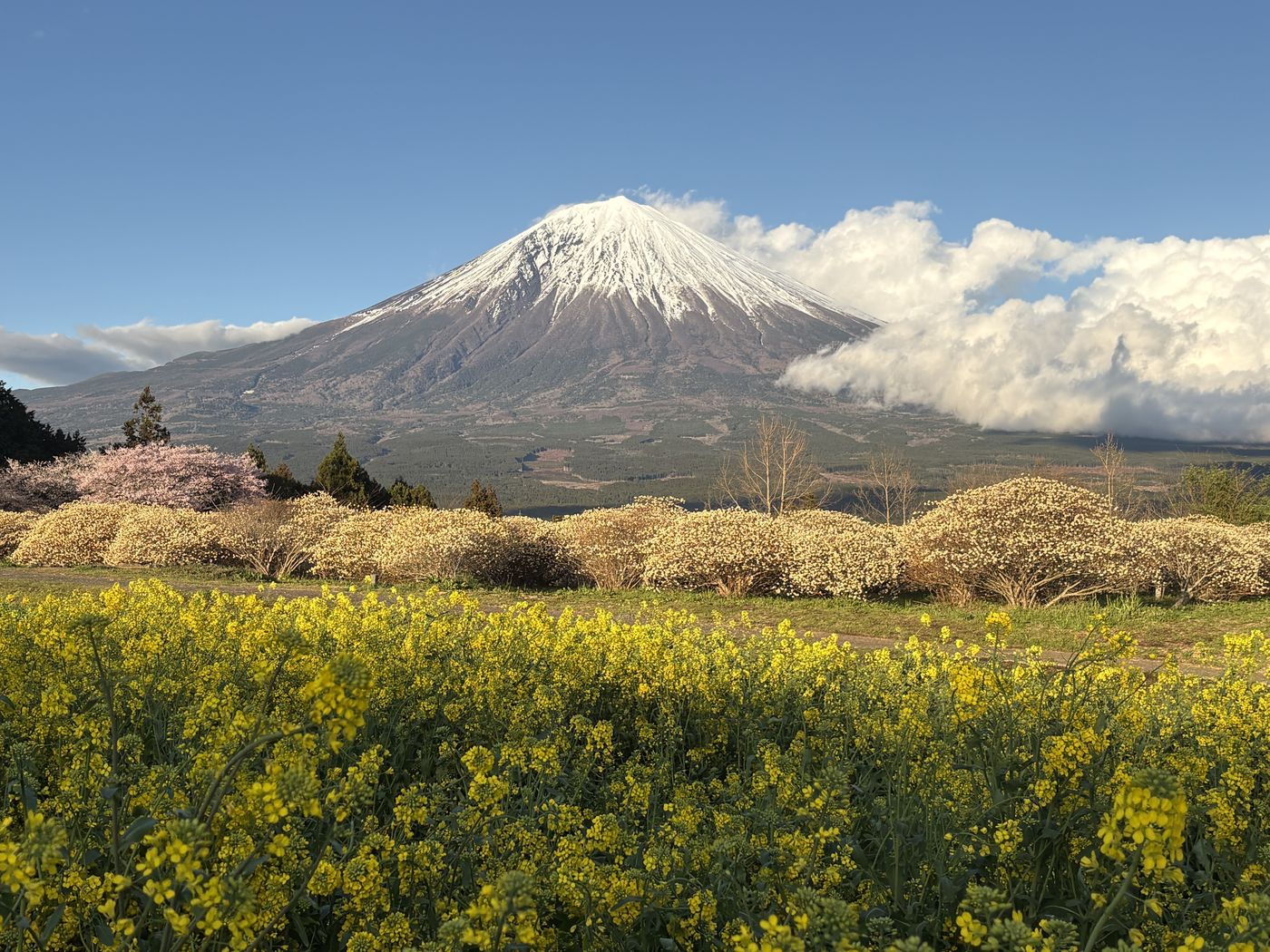
Most travelers see Mt. Fuji on a full-day bus tour from Tokyo: two to three hours out, the same back, and a whole day of your itinerary gone. But the Tokaido Shinkansen — the bullet train you're already taking between Tokyo and Kyoto — passes right by the mountain's southern foot.
Shin-Fuji Station sits about an hour from Tokyo and roughly two hours from Kyoto. Step off mid-journey, spend four hours at the mountain, and board a later train onward. You arrive in Kyoto (or Tokyo) the same evening, having traded a travel day for a Mt. Fuji day. That's the entire trick.
The trains: what to know before you book
- Only the Kodama (こだま) stops at Shin-Fuji — not the Nozomi or Hikari. The Kodama is the all-stations service: slower overall, usually less crowded, and covered by the JR Pass.
- Search for Shin-Fuji as your destination, then as your departure station. Use SmartEX's official reservation guide or ask a JR ticket office to plan the two legs. A through SmartEX ticket does not allow you to exit at an intermediate station and reuse its remaining section.
- Check connections for your travel date. If you combine a faster service with a Kodama, use the transfer station shown in the official journey search. After booking the tour, send us both train times so we can plan your day.
- Book the trains separately from the tour. Rail tickets are not included. If using a rail pass, check its coverage and reservation rules with the pass issuer.
What about luggage?
This is the question everyone asks, and it's the easiest one. On a private tour, the van can store most suitcases for groups of up to three guests — your bags ride with you. Bigger groups have two options at Shin-Fuji Station: the coin lockers (¥300–800, cash or a Japanese transit card such as Suica — no credit cards), or the luggage storage at the Shin-Fuji Station Tourist Information Center, open 08:30–17:00 (cash only) with more room for large cases. Both are outside the ticket gates. Either way, you walk back onto your train with everything you arrived with.
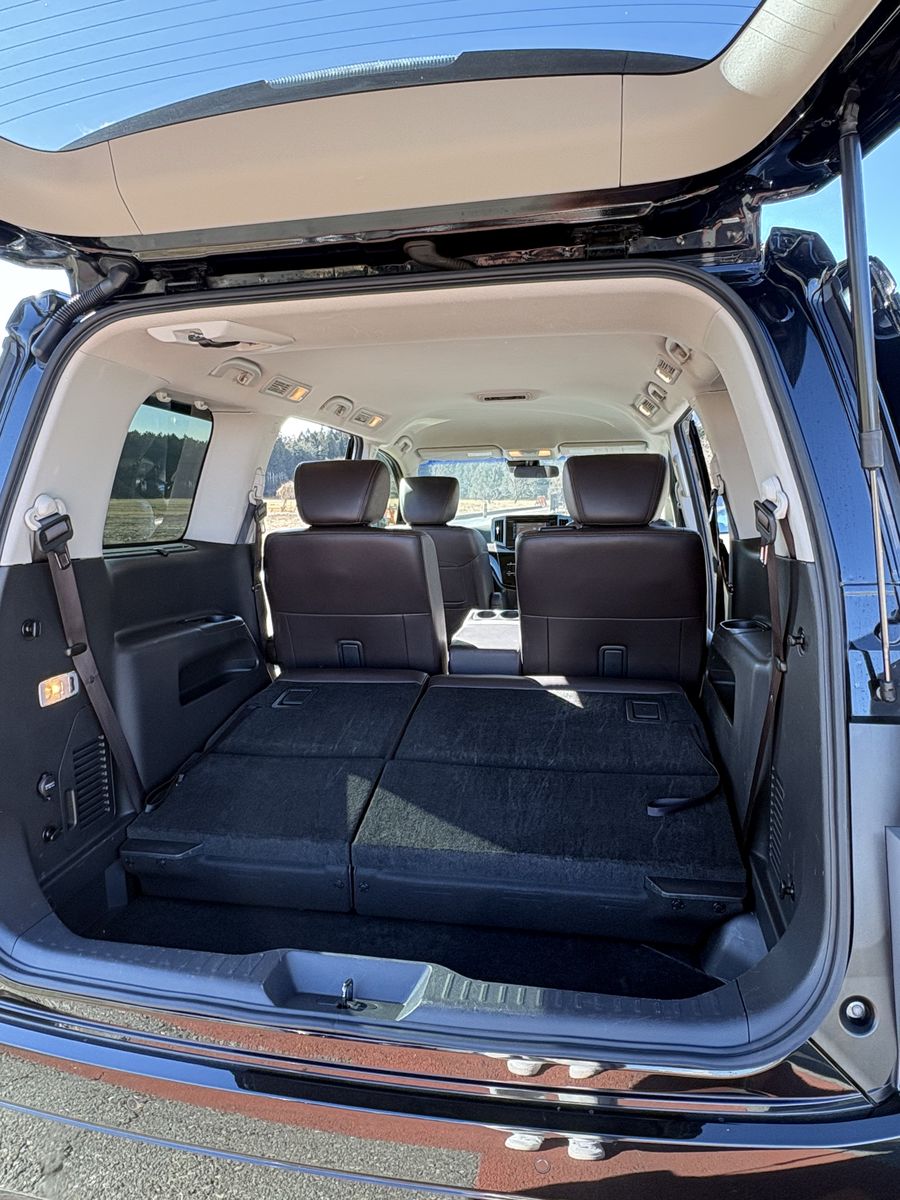
Tell us your group size and number of large cases before booking — especially if anyone has more than one large case — so we can confirm everything fits. Lockers and the Tourist Information Center storage both depend on available space; the center charges ¥400–800 per bag, per day, and you need to collect your bags before 17:00. For the train itself, check JR Central's current baggage rules; tour-van storage does not replace any rail baggage reservation you may need.
Plan the time between your trains
Use this planning sequence rather than treating an example departure time as a live timetable. Choose your trains for your actual travel date and leave at least 30 minutes between tour end and onward departure. Waiting for the next suitable train may add time.
- Arrival: choose a train that stops at Shin-Fuji and allow time to leave the platform and meet your guide at the gate exit.
- Tour: allow four hours from your agreed meeting time. Share food, tea and cultural interests after booking; your guide helps choose what fits.
- Departure: add the 30-minute buffer, then choose a suitable onward train. For example, a tour starting at 9:00 finishes at 13:00, so look for a departure at 13:30 or later. This is a planning example, not a train schedule.
The same sequence works for Tokyo → Kyoto, Kyoto → Tokyo, or a return trip to Tokyo. For more time on the ground, see the tour extension options; extensions require our agreement and an additional payment.
What is included, and what costs extra?
The private tour includes your local English-speaking guide and private vehicle. Train tickets, food, drinks, entry fees and optional activities are separate. For example, yakisoba is ¥900 per person and the matcha café option is ¥1,000 per person, paid on-site. You do not need to book every activity: we help you choose a combination that fits your time and interests.
Check current tour prices and availability for your group size. The private van takes 1–5 guests. The Weekday group tour has a different, six-hour schedule; do not use the four-hour plan above for that tour.
What can you actually do in four hours?
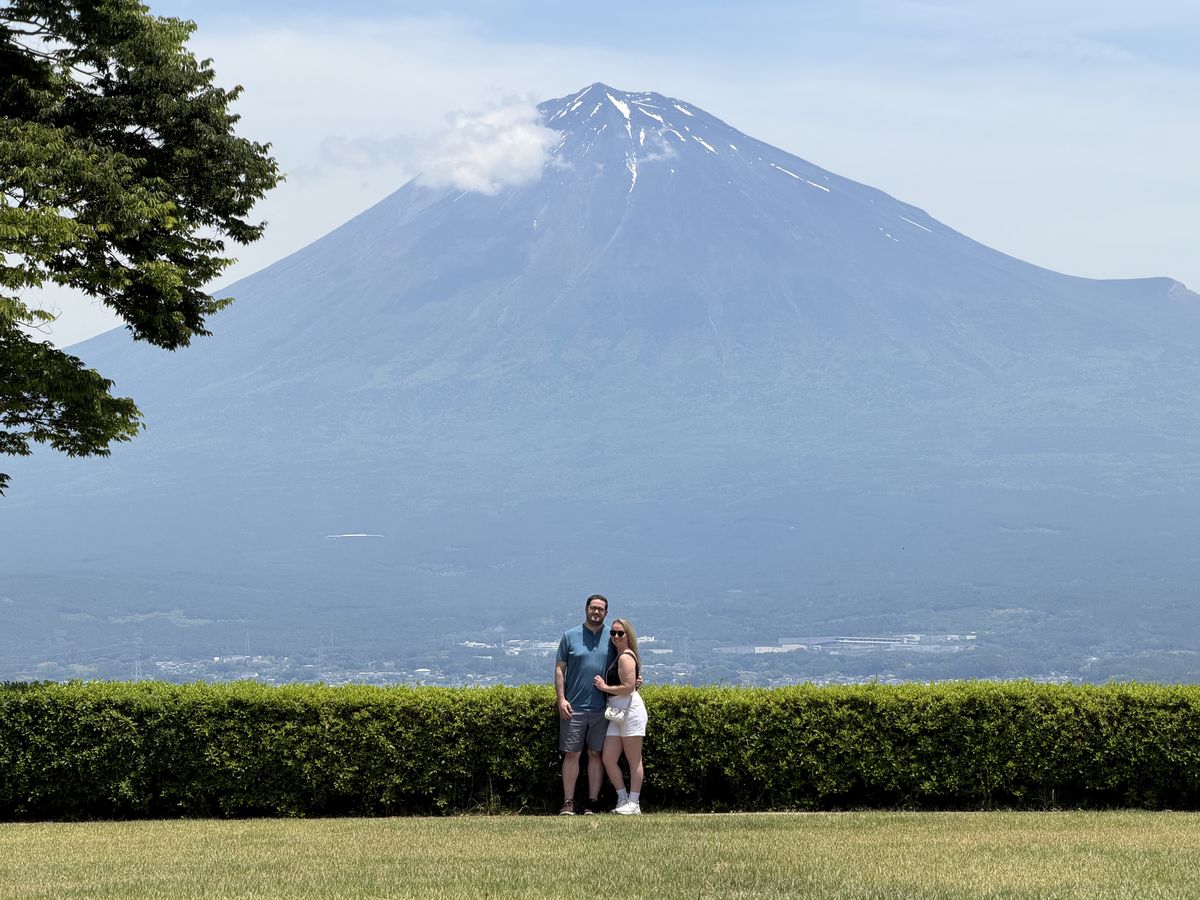
Choose a mix of experiences on the mountain's southern side. These are possibilities, not a promise that every stop fits into one tour:
- Hidden viewpoints — chosen the morning of your visit for the clearest angle on the mountain (here's how locals avoid the crowds)
- Shrine culture — an introduction to the mountain’s spiritual traditions with your local guide
- Fujinomiya yakisoba — the region's B-1 Grand Prix–winning soul food, at a family-run shop (full story here)
- Green tea or matcha as a local tea experience, with time to slow down and enjoy the setting
You can do this independently with taxis and patience — or as a private half-day tour where a local bilingual guide meets you at the ticket gate, drives the day, and has you back on the platform with buffer to spare. Either way, the stopover is worth it.
Mt. Fuji stopover FAQ
Can you stop at Mt. Fuji on the bullet train between Tokyo and Kyoto?
Yes. The Tokaido Shinkansen — the bullet train between Tokyo and Kyoto — passes the southern foot of Mt. Fuji, and the all-stations Kodama service stops at Shin-Fuji Station, about an hour from Tokyo and roughly two from Kyoto. Step off mid-journey, spend about four hours at the mountain, and board a later train onward the same day.
Which bullet train stops near Mt. Fuji?
Only the Kodama (こだま) stops at Shin-Fuji Station — not the Nozomi or Hikari. Search for Shin-Fuji on SmartEX or ask a JR ticket office to plan your trains. Book an arrival leg and an onward leg; do not assume a through SmartEX ticket permits a sightseeing stop outside the station.
How long do you need for a Mt. Fuji stopover?
Allow four hours for the private tour plus at least 30 minutes before your onward train. Add your rail travel and any wait for a suitable departure. Your guide helps choose a realistic mix of views, food and culture; not every activity fits into one visit.
Can I do the Mt. Fuji stopover with my luggage?
Yes. On a private tour the van can store most suitcases for groups of up to three guests, so your bags ride with you. For larger groups, Shin-Fuji Station has coin lockers (¥300–800, cash or a Japanese transit card such as Suica — no credit cards) and luggage storage at the Shin-Fuji Station Tourist Information Center (08:30–17:00, cash only), both outside the ticket gates and subject to available space. Tell us your case count and group size before booking — especially if anyone has more than one large case — so we can confirm everything fits.
Do I need a tour, or can I do the Shin-Fuji stopover on my own?
You can do it independently with taxis and some planning. A private half-day tour removes the friction — a local bilingual guide meets you at the ticket gate, drives the day, helps plan luggage arrangements, and returns you to the station with a buffer before your onward train.